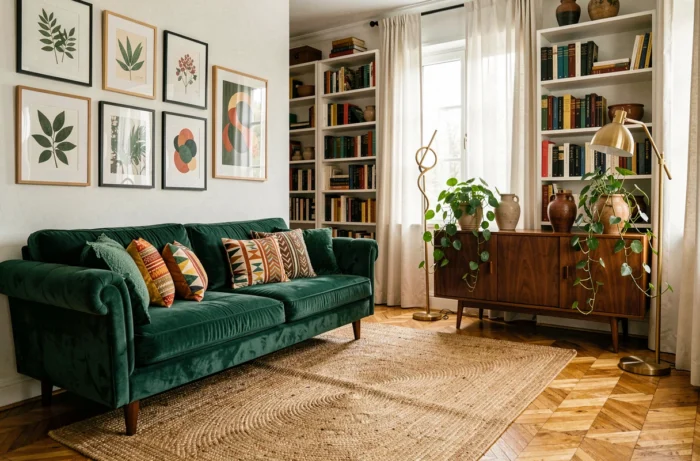
Interior decoration is going through a phase where the personality of the space takes precedence over strict adherence to an aesthetic trend. Trend analyses published in 2026 point to a shift towards what some call practical personalization: expressive interiors, rich in textures and colors, but structured around the actual uses of their inhabitants.
Customized decoration and life scenarios: what intentional maximalism changes
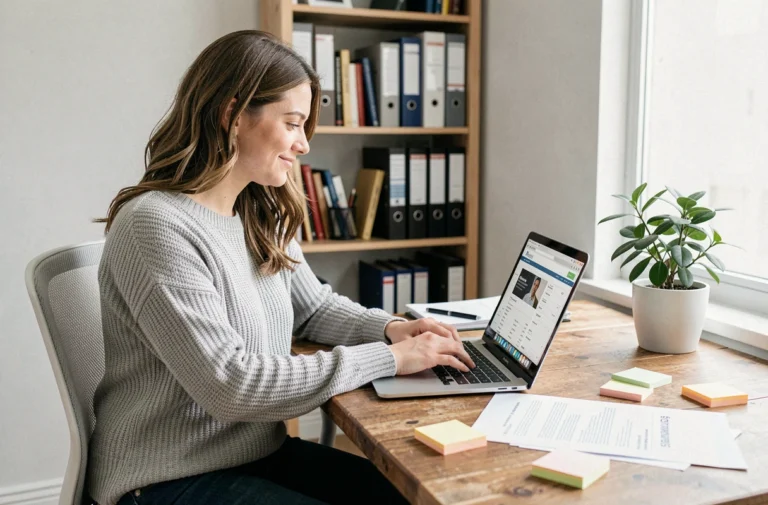
The maximalism that has been progressing for a few seasons is no longer about decorative accumulation without a guiding principle. Designers interviewed in the 2026 reports describe an intentional eclecticism organized around daily life: a reading nook with lighting designed for the evening, a sports area integrated into the living room, a remote work desk that does not hide behind a screen but takes its place.
This shift changes the way colors and furniture are chosen. The starting point is no longer a Pinterest palette but a list of concrete scenarios: relaxation, concentration, shared meals, preparation for uncertainties. The style comes afterward, as an expressive layer applied over a functional plan.
Online catalogs offering unique pieces facilitate this approach. For example, on nananere-deco.fr, you can find decorative objects and furniture that allow for a visual statement without sacrificing daily use.
Artificial intelligence and interior decoration: a tool for personalization, not a stylist
Generative AI applied to decoration gained visibility in 2026. Several platforms allow users to upload a photo of a room, describe a desired ambiance, and then receive a complete visual simulation with suggestions for colors, furniture, and accessories.
The interest lies in the speed of exploration. In just a few minutes, an individual can test a dozen color combinations on the walls of their living room or visualize a sofa in a specific fabric. For those who struggle to envision, the benefit is tangible.
Limits to keep in mind
Field feedback varies on the reliability of proportions. A piece of furniture suggested by AI may look perfect in a digital rendering but prove too imposing once installed in the real space. Current tools also struggle to account for natural light, which varies according to orientation, floor, and season.
AI works better as an idea accelerator than as a decision-maker. It helps break through creative blocks and discover material combinations that one might not have considered. The final decision benefits from a physical trial, even if it’s just a fabric sample or a test pot of paint.
Colors and materials in decoration 2026: the return of earthy tones and raw textures
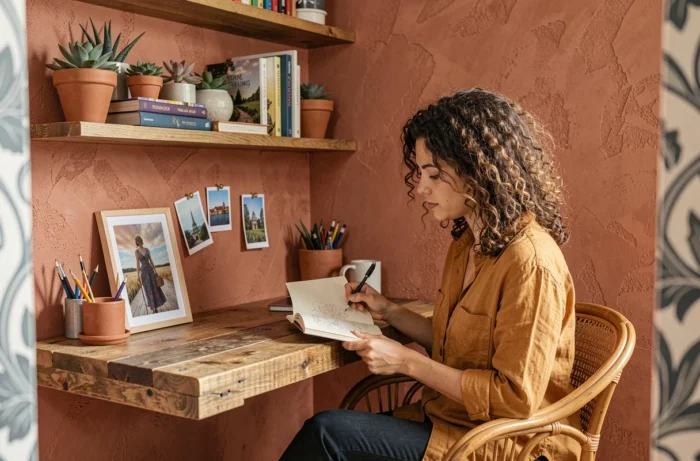
The neutral and cool palettes that have dominated interiors for several years are giving way. Earthy tones (ochre, terracotta, sage green, warm brown) are returning with a consistency that trend analyses describe as sustainable rather than cyclical.
- Lime plasters and textured washes replace smooth paint on one or two accent walls, bringing a visual depth that color alone does not produce.
- Unvarnished raw wood, left in its natural hue, serves as a connecting thread between rooms. It works well on a kitchen shelf as well as on a bed frame.
- Textiles made from natural fibers (crumpled linen, boucle wool, thick cotton) add a tactile dimension that enhances the lived-in character of a room.
- Patinated or oxidized metal, used in small touches (handles, lamp bases, frames), creates a visual temperature contrast with warm materials.
The combination of these elements does not follow a single recipe. A living room can combine a beige linen sofa, a terracotta plaster wall, and a blackened metal coffee table without belonging to a labeled style. It is precisely this freedom of combination that characterizes personalized decoration.
Accent wall and wall staging: going beyond the simple photo frame
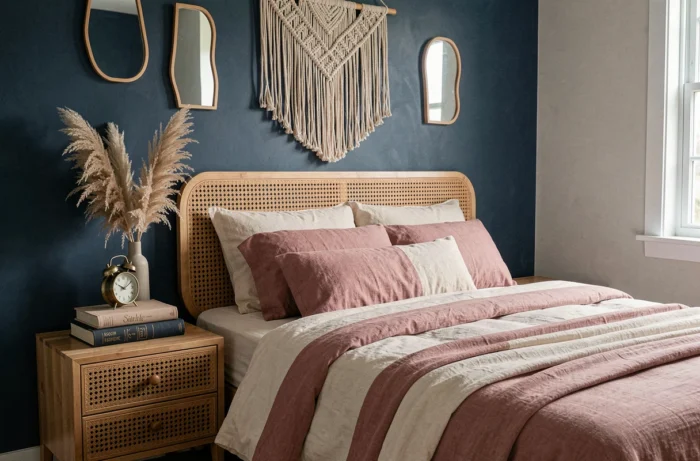
The wall remains one of the most underutilized surfaces in an interior. Many limit themselves to a series of aligned frames or a central mirror. Approaches that create real personality go further.
Asymmetrical compositions mixing objects and images yield more vibrant results than a symmetrical alignment. A travel mask, a small shelf supporting a vase, a framed drawing, and a wall sconce can coexist on the same wall without a cluttered effect, provided a coherent color palette is respected.
Panoramic wallpaper and wall design
Panoramic wallpaper is experiencing a resurgence of interest for bedrooms and entryways. Placed on a single wall, it establishes an ambiance without saturating the space. Botanical patterns or abstract landscapes work particularly well in modestly sized rooms, where they create a visual depth that pushes the perceived limits of the wall.
Graphic painting (arches, color blocks, gradients made with a roller) offers a more accessible and modifiable alternative. A weekend, some masking tape, and two shades are enough to transform a white wall into a full-fledged decorative element.
Antique furniture and thrifted pieces: a lever of personality that new items cannot replace
An interior composed exclusively of new furniture, even of high quality, can lack narrative depth. The introduction of one or two thrifted antique pieces (a dresser, an armchair, a light fixture) often suffices to anchor the decor in a story.
Flea markets, recycling centers, and peer-to-peer sales platforms fuel this market. The most reliable selection criterion remains the structure: an antique piece made of solid wood with sturdy joints is easy to restore, while a veneered piece from the 1970s requires a disproportionate amount of work compared to the result.
The mix of eras works better when it is embraced. Placing a 1950s bistro chair around a contemporary table creates a visual dialogue. Trying to mask the age of a piece by repainting it entirely in the same shade as the rest erases what made it interesting.
Personalized interior decoration relies less on choosing a unique style than on the ability to assemble heterogeneous elements with its own logic. The common thread can be a color palette, a dominant material, or simply a shared use of each object. An interior that reflects the lives of its inhabitants never goes out of style, because it never sought to be fashionable.