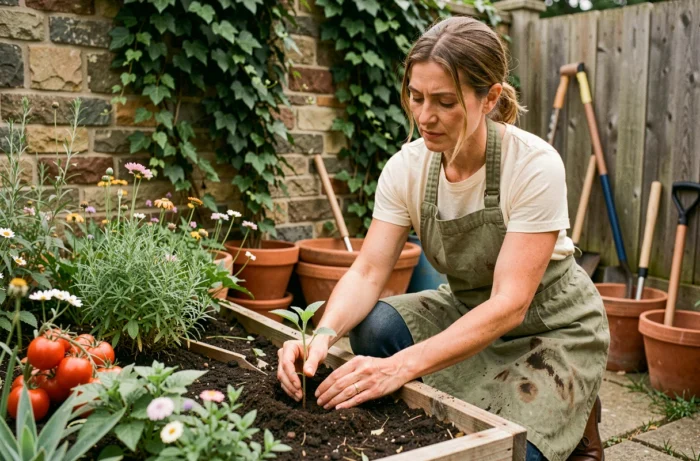
An ecological garden is based on a simple principle: working with the natural mechanisms of the soil, fauna, and climate rather than against them. Since July 1, 2022, the ban on synthetic phytopharmaceutical products applies to all outdoor spaces of private properties, including when a landscaper is involved. The natural garden is therefore no longer just a choice; it is also a regulatory framework. Here are ten concrete actions to transform your land into a resilient ecosystem.
1. Replace chemical weeding with thick and permanent mulching
Mulching is the first technical alternative to herbicides. A layer of organic matter (dead leaves, branch chippings, straw) placed on bare soil prevents the germination of weeds by blocking light.
Beyond weeding, permanent mulching protects the microbial life of the soil from temperature fluctuations and limits evaporation. Renew the layer once or twice a year, in autumn and spring, using plant residues produced on-site.
To deepen this approach, applying tips for a natural garden suited to your region and soil type makes all the difference between effective mulching and a decorative layer without effect.
2. Install a water point accessible to wildlife
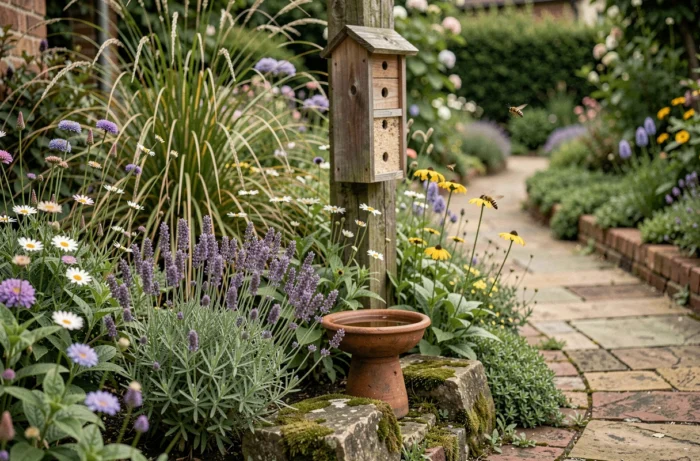
A simple dish filled with water, placed in the shade, attracts birds, hedgehogs, and pollinating insects. A pond of a few dozen liters, even without a pump, allows amphibians to settle and regulate slug populations.
Water is the number one limiting factor for biodiversity in an urban or suburban garden. Place flat stones or a branch across so that small animals can exit without drowning.
3. Leave a deliberately fallow area
A patch of unmowed lawn, even modest, becomes a habitat for butterfly caterpillars, grasshoppers, and predatory spiders within weeks. Nettles, often pulled out by reflex, alone feed the larvae of several butterfly species.
Fallow does not mean abandonment. Mow once a year, at the end of summer, to prevent colonization by woody plants. This action is enough to maintain a low meadow rich in wildflowers.
4. Build shelters with garden materials
A pile of logs stacked in a shady corner shelters beetle larvae, earwigs, and sometimes a hibernating hedgehog. Bundles of hollow stems (elder, bamboo) fixed against a south-facing wall serve as nesting sites for solitary bees.
These micro-habitats do not need to be sophisticated. Dead wood left on the ground is one of the most effective supports for biodiversity, much more so than an insect hotel bought at a garden center and rarely colonized.
5. Choose plants suited to the local climate
A plant that suffers from the cold, limestone, or drought of your land will require watering, amendments, and treatments. In contrast, a local or acclimatized species grows without assistance and feeds native pollinators.
Research your hardiness zone and the nature of your soil (clay, sandy, limestone) before any purchase. Local nurseries generally offer varieties selected for the region, which are more reliable than plants from large retailers.
6. Practice plant associations in the vegetable garden
Some plant combinations reduce pest pressure without any inputs. The basic principles:
- Marigolds planted at the base of tomatoes repel nematodes and whiteflies thanks to their root secretions.
- Basil, planted between rows of tomatoes, disrupts the olfactory tracking of several harmful insects.
- Nasturtiums, sown along the edge of the vegetable garden, attract aphids to themselves and keep them away from the main crops.
Companion plants replace insecticides with spatial strategy. Their effectiveness depends on proximity: plant them within thirty centimeters of the crop to be protected.
7. Feed the soil rather than the plant
A living soil, rich in earthworms, mycorrhizal fungi, and bacteria, provides plants with the nutrients they need. Adding mature compost on the surface, without burying it, is enough to maintain this fertility.
Avoid turning the soil deeply: digging destroys the soil structure and kills part of the underground fauna. A simple raking or using a broadfork aerates without disturbing the horizons.
8. Collect and manage rainwater
A rainwater collector connected to a downspout covers a large part of the watering needs of a family vegetable garden. Rainwater, free of chlorine and limestone, is better suited for plants than tap water.
Watering in the evening at the base of plants reduces evaporation by half compared to daytime sprinkling. Combine this habit with mulching to further space out watering.
9. Encourage insectivorous birds all year round
Blue tits, robins, and wrens consume a considerable amount of caterpillars, aphids, and larvae each day. To keep them around:
- Install appropriately sized birdhouses (about 28 mm for blue tits, 32 mm for great tits).
- Maintain a feeder filled with sunflower seeds in winter, when natural food is scarce.
- Plant berry-bearing shrubs (elder, hawthorn, blackthorn) that provide food in autumn.
A pair of blue tits feeding their young makes several hundred trips back and forth to the nest each day, each trip bringing back an insect.
10. Compost on-site to close the material cycle
Composting transforms kitchen waste and pruning residues into a free amendment rich in microorganisms. An open bin, placed directly on the ground in a semi-shaded corner, produces usable compost in a few months.
Composting on-site eliminates the transport of green waste and avoids the purchase of fertilizers. Alternate the addition of carbonaceous materials (dry leaves, brown cardboard) and nitrogenous materials (peelings, fresh clippings) to speed up decomposition.
Most of these practices cost nothing and mainly require a change in perspective on the garden. Accepting spontaneous herbs, tolerating a few holes in cabbage leaves, and leaving a quiet corner of land are gestures more effective than any product sold on the shelf. The French regulatory framework now prohibits chemical alternatives in private gardens, making these habits even more relevant to adopt right now.