In France, the word “café” and the word “bar” often refer, in everyday language, to the same type of place: a counter, a few tables, a drink ordered while standing or sitting. The confusion is old and understandable, as many establishments combine both functions. However, the regulatory framework, the menu offered, and the atmosphere that emerges tell different stories.
Alcohol License: The Criterion That the Facade Does Not Show
The clearest boundary between a café and a bar is not visible on the facade or in the decor. It lies in the type of license held by the operator, and this regime conditions everything else.
A café that serves only non-alcoholic drinks (coffee, tea, fruit juices, sodas) does not need any specific license. As soon as a single alcoholic drink appears on the menu, even a beer or cider, the establishment falls under the regime of beverage service. It then requires at least a license III, along with a declaration at the town hall.
A bar that offers spirits and cocktails falls under the license IV. The constraints increase: mandatory operating permit, alcohol-related prevention obligations, and enhanced regulatory signage. This administrative distinction has a direct effect on the menu, the hours, and the type of clientele that frequents the place.
Understanding the distinctions between bar and café thus begins with this legal foundation, even before discussing ambiance or decor.
Menu and Drinks: What Each Establishment Highlights
The historic café, as it has existed since the seventeenth century in France, is defined by its main product: the cup of coffee. Traditionally, tea, hot chocolate, and hot drinks were also added. Solid food remained marginal, limited to a pastry or a croque-monsieur.
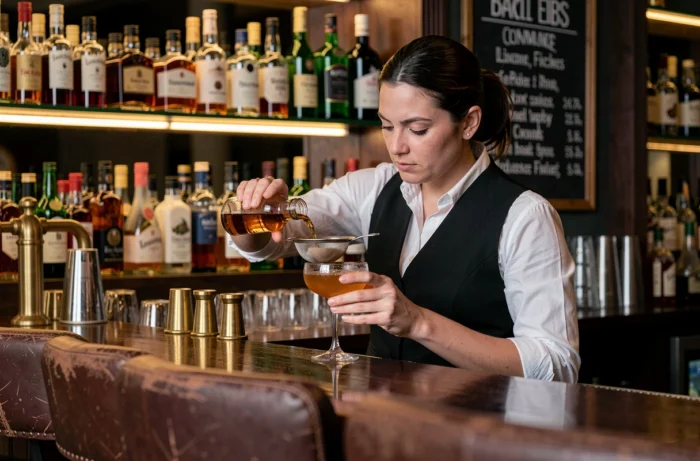
The bar, on the other hand, is built around alcohol. Its menu highlights draft beers, wines by the glass, cocktails, or spirits. The food aspect is secondary, sometimes absent. Appetizer platters or tapas, when they exist, accompany the consumption of alcoholic drinks without constituting the main offer.
An Increasing Ambiguity in Menus
Contemporary reality blurs these lines. Many Parisian and provincial cafés now serve craft beer or natural wine while maintaining their café identity. Cocktail bars offer an espresso at the end of the evening. The reliable criterion remains the license: it determines what the establishment is allowed to serve, not the sign it displays.
One point deserves attention: the regulations on happy hours, regulated in France, apply only to establishments serving alcoholic beverages. A café without an alcohol license is not subject to these restrictions, which clearly illustrates the difference in framework between the two types of places.
Ambiance and Daily Rhythm: Two Cultures of Sociability
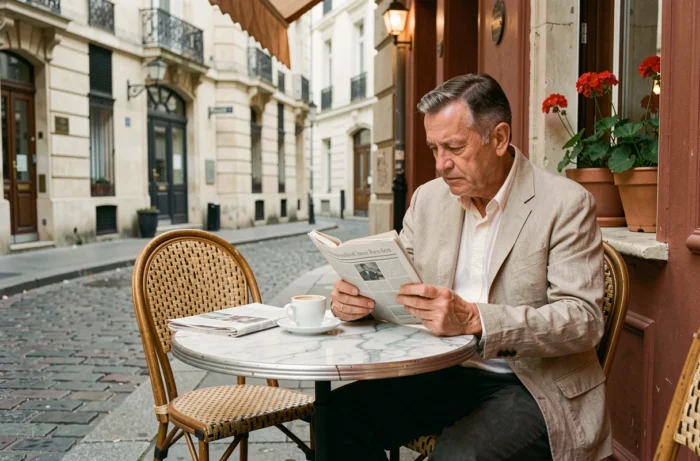
The French café inherits a tradition of daytime sociability. People come in the morning for an espresso at the counter, in the middle of the day to read or work, and in the late afternoon to chat. The typical furniture (small round tables, terrace chairs, zinc) encourages brief exchanges or prolonged stays in front of a newspaper. Natural light plays a central role in the atmosphere.
The bar operates on a different rhythm. Its activity starts in the late afternoon and peaks in the evening. The lighting is dimmed, and the music is more present (with specific legal obligations regarding noise for establishments playing amplified music). The counter is not just a service point but a full-fledged consumption area, often standing.
- The café favors daylight, moderate-voiced conversations, and a clientele spread throughout the day.
- The bar concentrates its activity in the evening, with a more pronounced sound atmosphere and a focus on alcohol consumption.
- The bistro, a term often confused with the previous two, historically refers to a small beverage establishment that also offers simple meals (daily specials, counter cuisine).

Erosion of the Number of Cafés in France: A Changing Landscape
The context in which this distinction is made is not fixed. In a century, the number of cafés and small bars in France has dropped from about 500,000 establishments to less than 40,000. This decline, described as drastic by several analyses, alters the perception of the landscape.
Establishments that survive tend to hybridize their functions. A village café becomes a bar in the evening. A wine bar offers brunch on weekends. This versatility makes the categories more porous than they have ever been, but it does not eliminate the fundamental differences.
The Role of Place in Local Life
In small communities, the disappearance of the last café often represents the loss of the last neutral social space, neither commercial nor private. The café remains a space for collective life that the bar, focused on the evening, does not quite replace. Initiatives to revive rural cafés, sometimes led by associations or local authorities, testify to this specific social function.
The candidacy of bistros and cafés in France for heritage recognition by UNESCO, promoted in recent years, also highlights that these places are seen as a distinct cultural element, not merely as beverage businesses.
Café, Bar, or Bistro: Guidelines to Navigate
The confusion between these terms persists because it suits everyone. Operators prefer an evocative name to an administrative category. Customers choose a place for its atmosphere, not for its license.
- If the establishment opens early in the morning and its flagship product remains the espresso or crème, it is culturally a café.
- If the menu highlights cocktails, beers, and spirits with activity concentrated in the evening, it is a bar.
- If you are offered a daily special at the counter in a modest setting, you are probably in a bistro.
- If the sign says “café” but the license IV is prominently displayed on the wall, the place legally operates as a bar.
These guidelines do not claim to cover all scenarios. Feedback from the field varies on this point, and each city, each neighborhood produces its own hybrids. The only constant remains the regulatory framework: the license held by the operator sets the limits of what can be served, and it is this limit that ultimately distinguishes a café from a bar.