Paris concentrates a volume of cultural offerings each week that few European capitals can match. Temporary exhibitions, theatrical creations, outdoor concerts, heritage sites open for just a few hours: the cultural news in Paris and its surroundings changes so quickly that it becomes difficult to sort through without a method. Understanding the rhythms of this programming helps to identify the events that are truly worth the detour.
Paris Design Week and local culture in the neighborhoods
Have you ever noticed that some Parisian events transform entire streets into open-air galleries? Paris Design Week perfectly illustrates this phenomenon. In September 2026, the event took over Le Marais, Saint-Germain-des-Prés, the Opéra, and Bastille with over 320 locations open to the public for free.
This format of free cultural strolls through several neighborhoods changes the way culture is consumed. One no longer moves towards a single location: one traverses a path, pushes open the door of a workshop, and stumbles upon an installation in a courtyard. Design steps out of museums to root itself in local life.
To keep track of such events without missing the dates, several local media compile Parisian news week by week. The information published on lagazettedhector.fr particularly covers these cultural and local events that punctuate neighborhood life.
What distinguishes these decentralized events is their ability to reach an audience that does not frequent large institutions. A family living in Bastille discovers a Finnish designer in the shop next door. A retiree from Saint-Germain-des-Prés pushes open the door of a showroom he thought was reserved for professionals.
Heritage Days in Paris: rare access that makes a difference
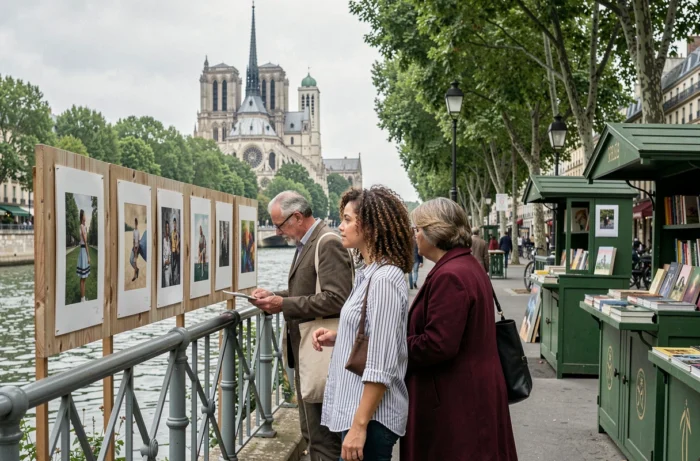
European Heritage Days generate a massive influx to major monuments each year. But the true value of this weekend lies in the places rarely open to the public that welcome visitors for just a few hours.
In 2026, notable openings included the Senate, the Luxembourg Palace, the Saint-Germain-des-Prés church, and the Monnaie de Paris. These sites do not offer regular tours, creating a unique window to discover them.
Visiting without reservation, a strategic choice
Some of these places remain accessible without prior reservation. This is a point not to be overlooked if you decide at the last minute to go out that weekend. There are queues, but sites without reservations often attract fewer people than flagship monuments like the Élysée or Matignon.
To take advantage of this, prioritize slots on Saturday morning or Sunday late afternoon. Visitors tend to concentrate heavily on Saturday between 2 PM and 5 PM.
- The Senate and the Luxembourg Palace offer a glimpse into the historical salons usually closed, with volunteers contextualizing each room.
- The Saint-Germain-des-Prés church, one of the oldest in Paris, reveals Roman architectural elements that are invisible from the nave during a regular visit.
- The Monnaie de Paris opens its minting workshops, allowing visitors to see machines and artisanal gestures that the permanent museum does not show.
Eco-responsible events in Paris: a charter that changes the rules
The City of Paris published a revised version of its charter for eco-responsible events on September 14, 2026. This document now governs waste management, lighting, noise, sustainable food, the phasing out of plastic, and the consumption of water and energy.
In practice, this charter applies differently depending on the type of event. An outdoor festival does not have the same constraints as a gallery exhibition. Organizers must adapt their practices to a specific set of criteria.
What this changes for the public
For the spectator, the effects are visible. Fewer disposable cups, less energy-consuming lighting, catering that prioritizes short supply chains. These adjustments change the atmosphere of events without reducing their quality.
This local regulatory framework also pushes organizers to rethink the format of their events. Several recent announcements mention extended night openings and paths designed as experiences rather than just outings. Reducing the environmental footprint forces a concentration of programming, which sometimes results in denser and better-thought-out events.
Family outings and shows in Île-de-France
Cultural news does not stop at the périphérique. Île-de-France offers programming that complements that of Paris, often with more accessible prices and less crowded spaces.
- Francilian castles regularly schedule outdoor shows between May and October, with reduced capacities that ensure proximity to the artists.
- Peducational farms and regional natural parks organize cultural walks that blend local history and the discovery of rural heritage.
- Neighborhood cinemas in the inner suburbs maintain a more varied art-house programming than Parisian multiplexes.
For families, these outings outside of Paris present a logistical advantage. Less transportation, less waiting, more time on site. A concert in a park in Seine-et-Marne or a castle visit in the Yvelines turns a half-day into a full outing without the fatigue of a round trip on the metro.
The cultural news of Paris and its surroundings operates in layers. Major events capture attention, but neighborhood gatherings, exceptional openings, and local initiatives in Île-de-France compose a cultural fabric that only regular follow-up allows one to exploit. The 2026 rentrée confirms this trend with programming that values both proximity and the spectacular.